

Special Sessions
Special Session: Wireless Communications and Artificial Intelligence: Intersection and Integration
Wireless communications have undergone continuous evolution to support massive connectivity and diverse service demands. Traditional wireless networks adopt rule-based algorithms for resource scheduling and management, which struggle to cope with stringent requirements on high throughput, low latency and dynamic radio environments. Artificial intelligence has become a core enabler to tackle such bottlenecks. AI-powered wireless systems can exploit massive real-time data to realize intelligent spectrum optimization, congestion prediction and autonomous resource allocation. Edge AI further pushes computing capabilities toward network edges, supporting ultra-low-latency services including autonomous driving and intelligent healthcare. Moreover, AI lays a solid foundation for future 6G networks targeting holographic communication, digital twins and XR applications. This special session focuses on the intersection and integration of wireless communications and AI, aiming to gather state-of-the-art research and facilitate academic exchanges for smarter, self-adaptive communication networks.
Topics:
* AI-native Wireless Network Architecture for 6G
* Deep Learning-Based Dynamic Spectrum Sensing and Access
* Reinforcement Learning for Radio Resource Allocation and Scheduling
* Edge AI Enabled Low-Latency Wireless Communication Systems
* Machine Learning for Channel Estimation and Channel Prediction
* AI-driven Network Congestion Prediction and Traffic Shaping
* Federated Learning over Wireless Communication Networks
* AI for Integrated Sensing and Communication (ISAC)
* Deep Learning-Based Signal Detection and Interference Mitigation
* Digital Twin Empowered Intelligent Wireless Networks
* AI for XR and Holographic Communications in 6G
* Transfer Learning and Meta-Learning for Time-Varying Wireless Channels
* Explainable AI for Wireless Communication Optimization
* AI-enabled Autonomous Management and Self-Optimization of Cellular Networks
Submit Method:
Submit it via the link: http://www.easychair.org/conferences/?conf=mlcc2027 (after entering the link, click on the corresponding topic)
Special Session Organizers:
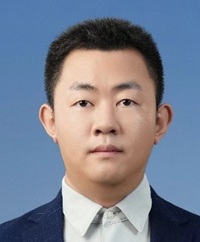
Assoc. Prof. Hongwei Wang, University of Electronic Science and Technology of China (UESTC), China
Hongwei WANG is an Associate Professor at the University of Electronic Science and Technology of China (UESTC). He received his B.S. degree in 2013 and Ph.D. degree in 2019, both from Northwestern Polytechnical University (NPU), Xi'an, China. During his doctoral studies, he was a joint Ph.D. student at Nanyang Technological University, Singapore, and Stevens Institute of Technology, USA. From December 2019 to July 2024, he worked as a postdoctoral researcher at UESTC, and subsequently joined the faculty as an Associate Professor. In recent years, he has published more than 30 academic papers, led or participated in over 10 projects funded by the National Natural Science Foundation of China (NSFC) and other agencies, and serves as a member of the CIGRE D2 China Committee. His research interests include statistical signal processing, compressive sensing and sparse theory, THz communications.
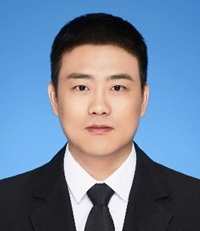
Assoc. Prof. Shuai Wang, University of Electronic Science and Technology of China, China
Shuai Wang received the PhD degree from the School of Science and Engineering, The Chinese University of Hong Kong, Shenzhen, China, in 2021. He is currently an associated professor at the University of Electronic Science and Technology of China. Before that, he was a postdoctoral research fellow with the Information Systems Technology and Design Pillar, Singapore University of Technology and Design, Singapore. His current primary research interests include optimization algorithms for signal processing, machine learning and communication systems, distributed optimization and federated learning (FL), data security and privacy protection in distributed systems, integrated sensing and communication (ISAC), etc. He has published more than 30 academic papers and serves as the Youth Editorial Board Member of two journals, and the session chair of ICCT 2025.

Assoc. Prof. Mangang Xie, Northwest Normal University, China
Mangang Xie received the Ph.D. degree from Sun Yat-sen University, Guangzhou, China, in 2022. He is currently an Associate Professor with the College of Artificial Intelligence and Computer Science, Northwest Normal University, Lanzhou, China. His current research interests include ubiquitous wireless communications and the Internet of Things.